You may be living overseas, working in another city or simply unable to visit your site regularly. Your home still needs timely decisions, technical coordination and clear responsibility.
Remote involvement works best when everyone knows who is responsible for what, what information you will receive and which decisions require your approval.
If you are exploring remote home construction in Chennai, speak with Luxury Homes of India about the construction, engineering and project-management support your project may require. The specific remote arrangements, reporting process and responsibilities should be agreed for your individual project.

Start by identifying your project's current stage
The right support depends on where your project stands.
Starting with a plot
Begin by establishing the brief, site information, design responsibilities and construction scope before execution begins.
Working with completed drawings
Review the available drawings, specifications, consultant appointments and proposed construction responsibilities.
Construction already underway
First establish the existing contract, current progress, outstanding decisions and any work requiring professional review.
Do not assume that taking over coordination also means accepting responsibility for previous design or construction decisions.
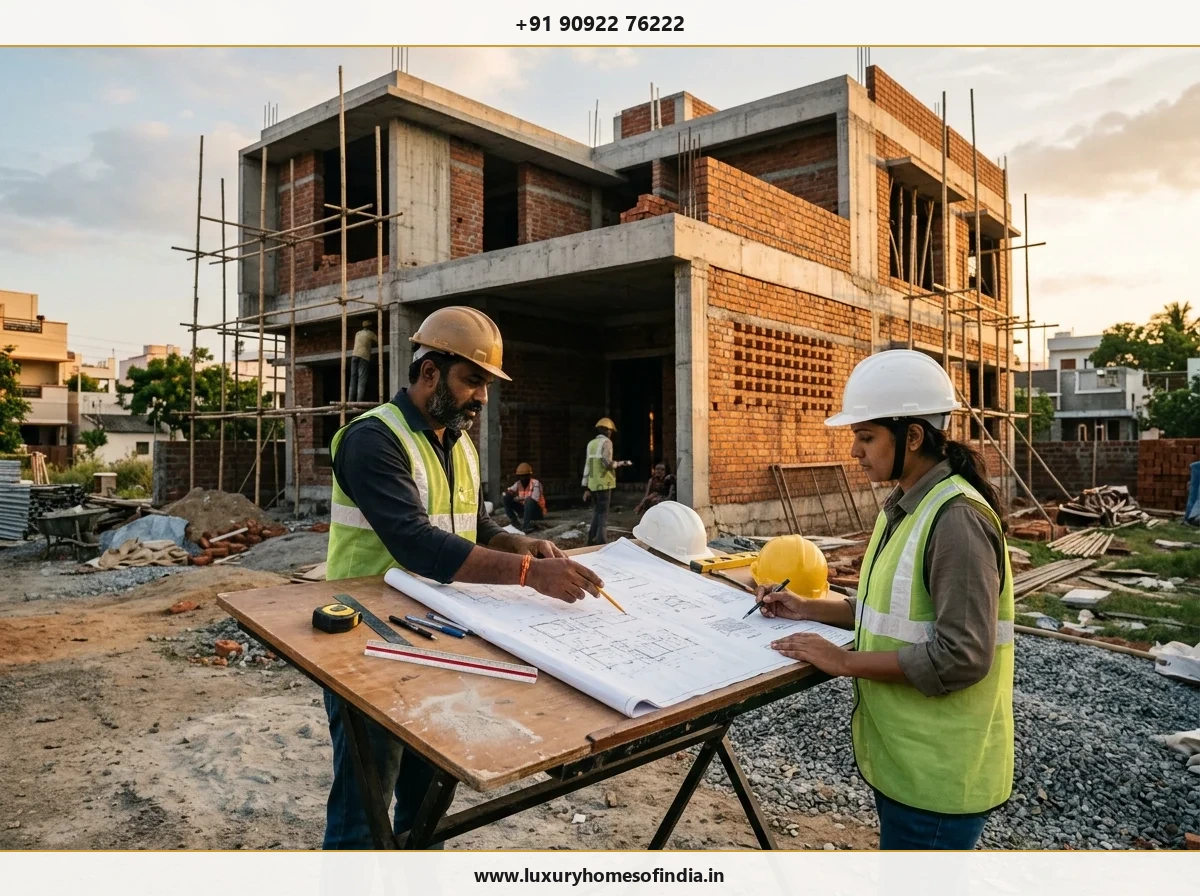
Define who is responsible on site
A homeowner who is away from Chennai needs clarity about the local project team.
Before work progresses, establish:
- Who coordinates daily execution.
- Who supervises site activities.
- Who reviews technical matters.
- Who communicates project progress.
- Who manages procurement.
- Who records changes.
- Who is authorised to approve expenditure.
- Who checks completion.
Project management, technical inspection and independent review are different functions. They should not be treated as interchangeable.
Agree on reporting that helps you make decisions
A useful project update should explain what has happened, what comes next and where your decision is required—not simply send photographs.
Depending on the agreed project arrangement, discuss whether reporting should cover:
- Work completed.
- Upcoming activities.
- Progress against the agreed programme.
- Outstanding drawings or information.
- Decisions required from you.
- Procurement status.
- Proposed and approved variations.
- Relevant inspection or testing records.
- Issues requiring action.
Confirm the format, frequency and responsible person in writing.
Do not assume that daily videos, live cameras, dashboards or a particular update schedule are included unless LHI has explicitly agreed to provide them.
Make approvals clear and traceable
Remote decisions need enough information for the project team to act correctly.
| Approval item | What to record |
|---|---|
| Drawing | Document name and revision |
| Material | Product, specification, finish and allowance |
| Equipment | Model and supply or installation responsibility |
| Variation | Scope, cost and programme implications |
| Substitution | Proposed alternative and reason |
| Completion item | What was reviewed and what remains outstanding |
Agree who is authorised to approve decisions and how those approvals will be retained.
Informal messages should not leave the project team uncertain about the agreed scope.
Understand the limits of remote review
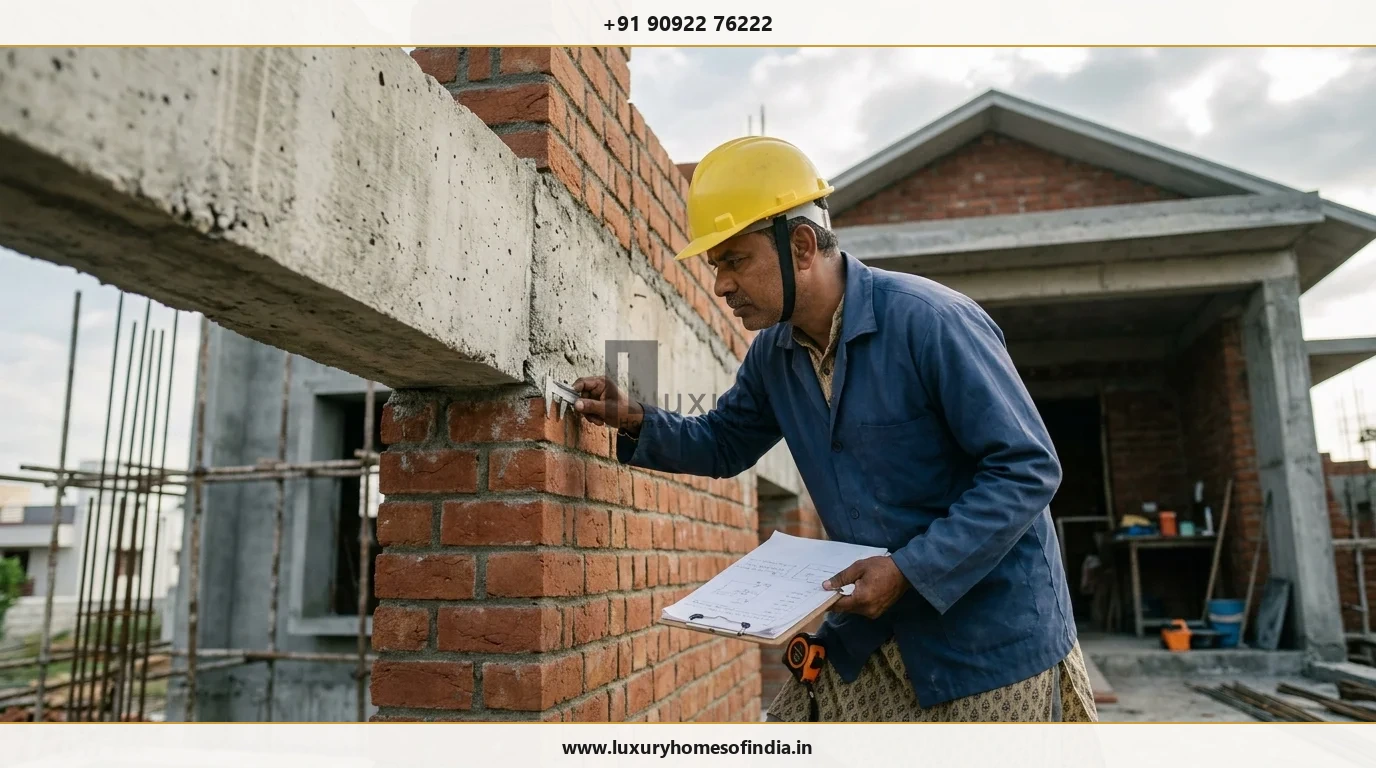
Photographs and video calls can help communicate progress. They do not automatically replace the on-site assessment required for particular construction activities.
Concealed work, structural requirements and specialist installations may require review by the responsible professionals.
Your appointment should identify:
- Which checks are required.
- Who carries them out.
- What records are provided.
- Which issues must be referred to the designer or engineer.
- Whether independent inspection is separately arranged.
A contractor's progress report should not be described as an independent audit of that contractor's work.
Coordinate a local representative where needed
A family member or appointed representative may help with access, sample review or agreed site activities.
Define their role before relying on them.
Clarify:
- Their authority.
- Decisions reserved for you.
- How instructions are recorded.
- How conflicting directions are resolved.
- Any formal authorisation required.
Seek qualified legal advice where powers of attorney or other formal arrangements are needed.
Keep budget changes visible
Distance should not make variations harder to understand.
Before approving additional work, request:
- A description of the change.
- Relevant design or technical review.
- The cost impact.
- Any programme implications.
- Written authorisation before execution.
Also confirm payment milestones, allowances, procurement commitments and who can approve expenditure.
Remote coordination does not guarantee that a project will remain within its initial budget.
Construction and engineering support with LHI
LHI's published residential offering includes architectural planning, structural engineering, turnkey villa construction, luxury interior execution and smart-home integration.
Its public service information also describes civil engineering and construction and turnkey project execution.
The specific combination of services available to a remote homeowner—and how remote communication, site coordination and reporting are handled—should be confirmed before appointment.
Plan completion before handover
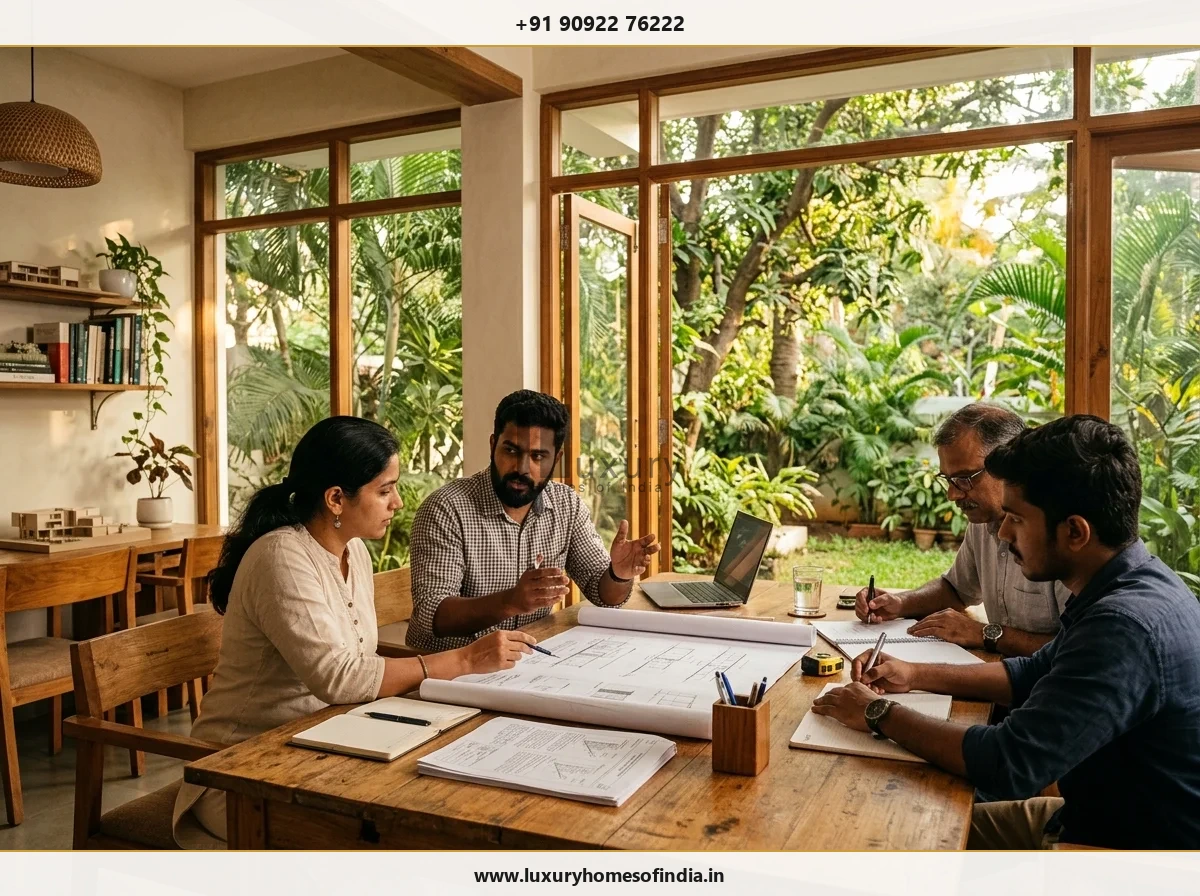
If you cannot attend personally, agree on the review and acceptance process early.
Discuss:
- Who inspects the completed work.
- How snagging and outstanding items are recorded.
- Relevant testing and commissioning.
- Equipment manuals.
- Warranty information.
- Keys and system access.
- Maintenance guidance.
- Documents included in the agreement.
Identify any independent inspection separately from the builder's completion checks.
Frequently asked questions
Make remote involvement practical
Bring your plans, current project information and communication expectations to the initial discussion.
Speak with Luxury Homes of India about an appointment that makes site responsibilities, decisions, reporting and completion requirements clear.
Call: +91 90922 76222
Email: info@luxuryhomesofindia.in